
What Is Virtual Reality? Everything a Beginner Needs to Know
Have you ever felt like you were in a game or somewhere else when you put on a VR headset? When you use VR, or virtual reality, you feel like you’re in a computer world and the real world is gone. It sounds like something from a sci-fi movie, but it’s real and more people are using it than ever before.
This guide will teach you all the basics of VR. This is a short guide that explains what VR is, how it works, and why so many people are excited about it. There are no technical terms that are hard to understand.
What Is Virtual Reality?
With special headsets and other gear, virtual reality creates a whole digital world around you. Everything else disappears when you put on a VR headset. Instead, you see, hear, and sometimes even feel a world made by a computer.
It’s one thing to watch a movie about water. But when you use virtual reality, it really feels like you’re in the water with fish swimming all around you.
Virtual reality doesn’t improve reality; it deteriorates it. The main idea behind the technology is that, and that’s what sets it apart from everything else we’ve seen.
How Virtual Reality Works
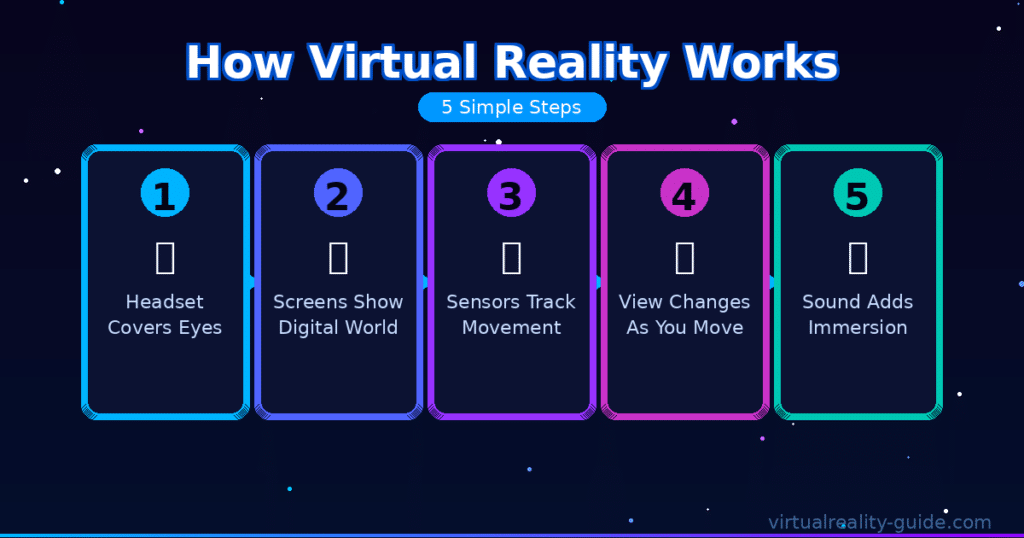
You might be curious about how putting on a headset can make you feel like you’re in a different place. It isn’t as hard as it sounds. Step by step, this is how to use VR.
Step 1: Put the headset on your head. A VR headset looks like a pair of goggles that you wear on your face. It blocks out all the light from outside so you can only see what the device shows you.
Step 2: The screens show the digital world. There are two small screens inside the headgear, one for each eye. In three dimensions, these screens show a digital world. Your brain combines the two images to make one deep, real scene.
Step 3—Sensors watch how your head moves. This is where the real magic happens. The sensors in the headset can tell exactly where your head is and how it is moving.
Step 4: The view changes as you move. The digital world moves to the left when you turn your head to the left. When you look up, you can see the digital sky. This makes the event seem very real.
Step 5: Sound makes the experience feel more real. Most VR headsets come with sound. Just like in real life, the sounds you hear change depending on where you are.
You might see an enemy coming up on you if you turn around while playing a VR game. The fact that what you do in virtual reality changes the whole environment right away is what makes it so real.
Virtual Reality Examples in Real Life
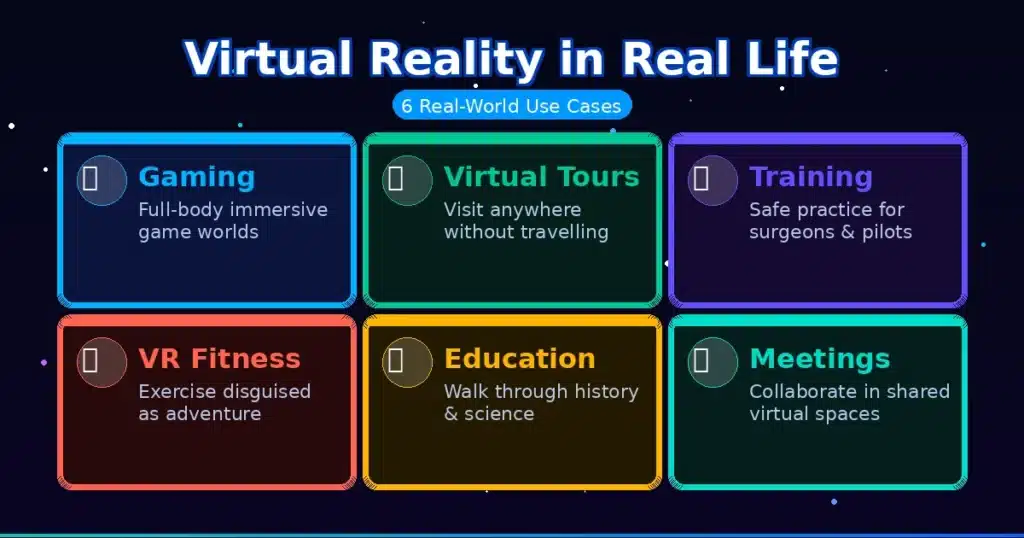
Virtual reality is more than just games now. A lot of people are using it in ways that are both surprising and helpful in their daily lives.
This might be the most well-known way to play VR games. In games like Beat Saber and Half-Life: Alyx, players can move around and interact with a completely digital world. It’s a whole new thing to play on a regular screen.
Virtual Tours—Want to see the Eiffel Tower without having to leave your house? You can do it in virtual reality. Travel companies, museums, and real estate agents now offer virtual reality tours of places all over the world.
Training Simulations: Surgeons use virtual reality to practice surgeries before they do them for real. VR flight simulators help people learn how to fly. Firefighters and soldiers also use virtual reality to get ready for dangerous situations, and they do it in a way that is safe.
VR Fitness—Apps like Supernatural and others make working out fun. You’re not on a treadmill; you’re on top of a mountain swinging a fake sword. It’s a great way to stay in shape.
Education—Imagine how great it would be to learn about Rome while walking around it. With VR, kids can learn about history, science, and geography in a way that books can’t.
Some companies are now having meetings in virtual spaces where everyone looks like a cartoon character. In a shared digital space, you can walk around, shake hands, and work together. This is better than video calls.
VR vs AR — What Is the Difference?
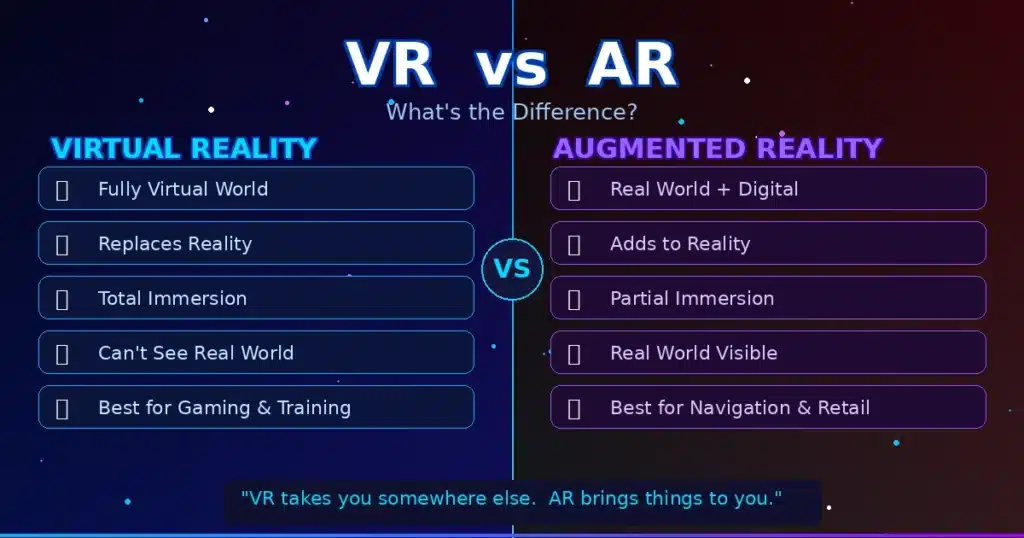
Some people get augmented reality (AR) and virtual reality (VR) mixed up. They are linked, but they don’t do the same thing.
With virtual reality (VR), you can go into a digital world. You can’t see anything real around you. A computer made everything you see.
Augmented reality (AR) lets you see digital things in the real world. In Pokémon GO, you can see your real street through your phone’s camera, but digital monsters appear on the screen.
It’s easy to remember that VR takes you to a different place. When you use AR, things come to you.
These two technologies are both growing quickly, but they do different things and give you different kinds of experiences.
VR Devices and Headsets
You need the right tools to use virtual reality. Here is a quick look at the VR devices that are most popular right now.
VR Headsets—These are the most important things you need. Many people like the Apple Vision Pro, the Sony PlayStation VR2, and the Meta Quest 3. Some headsets can be used without being plugged into a PC or gaming console, but others can’t.
Motion Controllers—Most VR systems come with controllers for your hands. You can reach out, grab, point, and touch things in the virtual world with these. Some more advanced systems can even follow your hands without any controllers.
Tracking Sensors—These sensors watch what you do so that the virtual world reacts the right way. Some headsets have cameras that look at the user’s movements from the inside out. Older systems had sensors all over the room.
You can touch things in virtual reality with this feature. Haptic gloves or controllers vibrate when you pick up a virtual object or get hit in a game. It makes the experience of virtual reality seem more real.
Benefits of Virtual Reality
There are a lot of good reasons why VR technology is moving so quickly.
Immersive learning—People learn better when they do things than when they read about them. It helps you remember what you’ve learned when you learn in VR because it feels real.
Safe training—VR lets people practice dangerous jobs like surgery or emergency response without putting anyone in real life at risk. It doesn’t matter if you make a mistake in VR.
Fun—VR games and stories are unlike anything else. You can’t really explain how present you feel until you do it.
Remote experiences—VR can connect people or take them to new places that they can’t go to in real life. During the pandemic years, this was very important.
Mental health and therapy—VR is helping people with PTSD, anxiety, and even their fears. With the help of a therapist, patients can safely face their fears in controlled virtual environments.
Creative design—Architects, product designers, and artists are using VR to plan their work and see it in 3D before they do it.
Challenges of Virtual Reality
Like all other technologies, VR has its problems. These are things you should know before you try it.
Some people get sick or dizzy when they use VR, especially when they move around a lot. This is called “motion sickness.” This happens because your brain gets different signals from your eyes and inner ear.
Price of the device—A good VR headset can be very expensive. Prices have gone down, but good VR setups are still worth the money.
Comfort limits—Wearing a headset for a long time can be uncomfortable. If you use the devices for a long time, they might get hot and heavy.
Space requirement—Some VR experiences need a clear, open space because you have to move around in real life. Not everyone has that much space in their house.
Battery life: Standalone VR headsets run on batteries, so you can’t play for very long before you have to charge them.
The Future of Virtual Reality
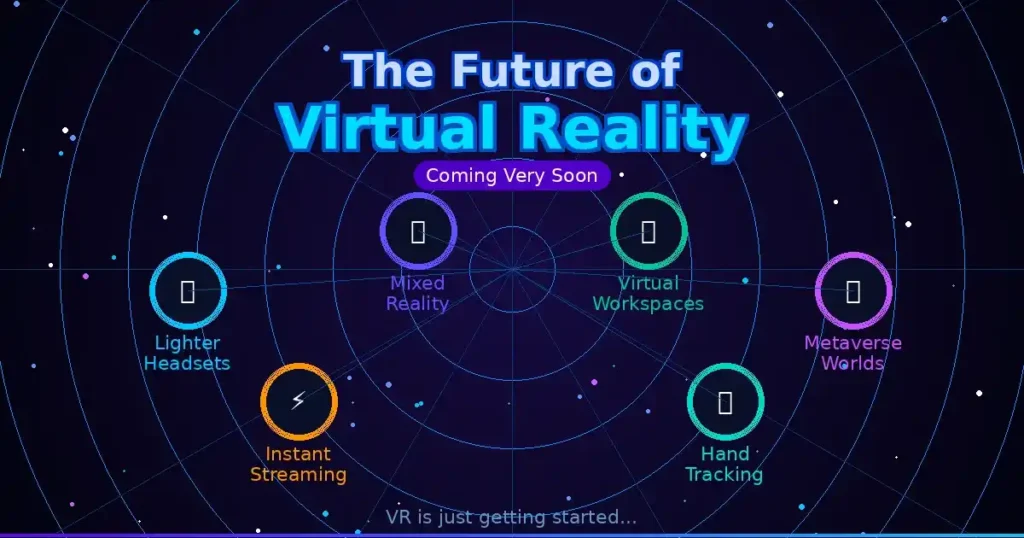
The future of virtual reality looks very bright. It looks like things are headed this way.
Headsets get lighter, more comfortable, and more powerful every year. The big, clunky devices of the past are being replaced by smaller, more comfortable ones.
People are starting to like mixed reality more and more. It combines the real world and the virtual world. Apple Vision Pro and other gadgets are trying to figure out how to use digital content in useful ways on top of the real world.
A lot of people are starting to use virtual workstations. More and more teams that work from different places are meeting in virtual reality spaces. They can talk about their ideas and work together as if they were in the same room.
The metaverse isn’t done yet. It’s a plan for a digital space where people can work, live, and hang out all the time. People will probably use VR the most to get there and have fun.
Virtual reality will likely become a routine part of life, both for business and play, as the technology gets better and cheaper.
Frequently Asked Questions About Virtual Reality
What does “virtual reality” mean in simple terms?
A headset lets you see a digital environment instead of the actual world. Instead of your real surroundings, you see, hear, and sometimes feel a computer-generated space.
How does virtual reality work?
The screens of a VR headset cover your eyes and show you a three-dimensional digital world. As you walk, sensors keep track of how your head moves and adjust the view in real time. This makes it seem real and like you’re there.
What do people use VR for?
You can use VR for a multitude of activities, such as gaming, virtual tours, medical and military training, fitness, education, therapy, meetings at a distance, and creative design.
Is virtual reality safe to use?
Most people can use VR safely as long as they don’t go overboard. Some people grow sick or tired of their eyes, especially after extended sessions. If you don’t feel well, it’s better to stop using VR and take a rest. Companies who develop devices should give youngsters age-appropriate advice.
Is VR the same as AR?
No, AR and VR are not the same. Virtual reality (VR) converts the actual world into a digital realm. You may observe the actual environment and add digital things to it with augmented reality (AR). They are comparable technology, yet they serve different purposes.
Wrapping Up
You can go into a digital world with virtual reality. You don’t just glance at a screen; you feel like you’re in a new location. In brief, VR enables you go to locations and do things that only exist in computers.
No matter what you’re doing—learning about ancient history in school, performing a difficult medical operation, or just having fun in a game—virtual reality makes everything feel genuine and near by.
The technology is getting improved quickly, but it’s not quite there yet. The issues with cost, comfort, and motion sickness are real. And for many individuals who have tried it, one session is enough to understand why VR is believed to be one of the most fascinating technologies of our time.
Try it out if you ever get the chance to wear a headset and go to a virtual world. It’s really one of a kind.
