
What are twins in the digital world? How might virtual copies help us make the real world better, plan for the future, and design?
What if engineers could test a new bridge design in bad weather before they poured the concrete? What if doctors could use a computer to try out different therapies on a digital model of your heart before choosing which surgery to do?
This isn’t a story from the future. Digital twins are real right now.
Companies in every field want better planning tools, therefore more individuals are looking for information on digital twins. They want to be able to spot problems before they happen, try out ideas without risk, and save money by doing things perfectly the first time. When we read about digital twins, we can see how technology is slowly changing several fields, such as manufacturing, healthcare, city planning, and more.
What do you mean when you say “digital twins”? (A Simple Definition)
What is this method called “digital twins”?
A digital twin is a fraudulent copy of something that is real. It may be a wind farm, a jet engine, a hospital, or perhaps a whole city. But here’s what makes it special: it’s not just a great 3D model that you look at once and then forget about. Sensors and data streams connect a digital twin to its real-world twin. When the real world changes, the digital version adapts to match it.
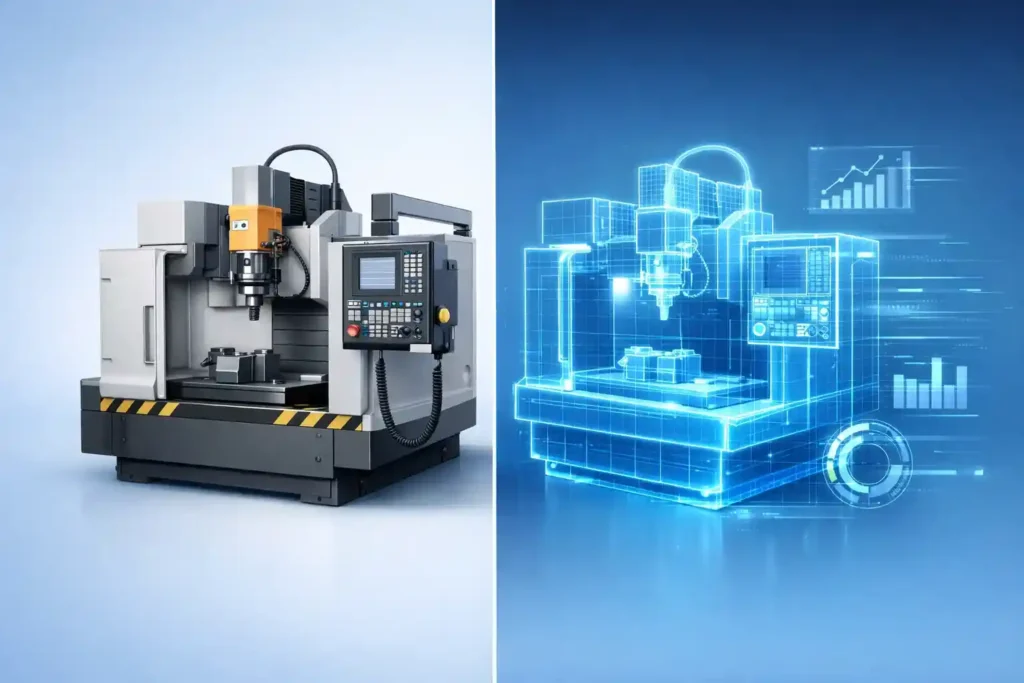
Digital twins are more than simply pictures on a computer. Like a mirror that moves. The digital version shows that the real machine is becoming hotter. The virtual copy shows that a valve in a factory has closed in a matter of seconds.
A digital twin is a virtual copy of a real object or system that uses real-time data to copy how it works, guess what will happen in the future, and try out different situations before they happen in real life.
It’s like having a safe place in real life to try things out.
What are the pieces that make up a digital twin?
To grasp how digital twins work, let’s look at the most important parts of them.
First, you need the thing. This might be the heart of a sick person, the heating system in a building, or the engine of a car.
Second, you need to put sensors on it. These sensors keep track of how fast, hot, cold, or vibrating the object is, where it is, how much energy it needs, or anything else that has to do with how it moves.
Third, you need data streams that move information from the sensors to the computers. This usually happens over the internet or through wireless networks.
Fourth, you need “software models” that can make a digital copy of the real thing act like it does in real life. These models explain how the real object works by following the rules of physics, math, and engineering.
Lastly, engineers, doctors, or planners need dashboards and interfaces that help them look at the digital twin, run tests, and make choices based on what they see.
These parts all work together all the time. The sensors are always getting new data. The software is always getting new versions. The digital twin changes when the real item gets older, changes, or has to deal with new challenges.
How Digital Twins Really Work
For example, let’s look at a simple one.
Picture a windmill on a hill. Engineers need to know when things might break so they can fix them before they do.
Here’s how it works:
Step 1: Sensors on the generator, gearbox, and turbine blades keep track of how fast they are spinning, how much vibration there is, how hot it is, and how much power it is making. These IoT devices gather thousands of pieces of information per minute.
Step 2: Cloud computing technologies send this information to a central platform in real time. Azure Digital Twins and other services from companies like Microsoft are meant to handle this kind of ongoing influx of information.
Step 3: The software uses simulation models to produce a virtual copy of how the turbine is right now. The digital version spins at the same speed, shows the same stress patterns, and wears down in the same way.
Step 4: Engineers use algorithms to plan maintenance ahead of time. They can ask things like, “When will the bearing break if the vibration keeps going up at this rate?” The system can guess that the break will happen in three weeks.
Step 5: Teams use the evidence to make decisions. They plan maintenance for times when the wind is low, order replacement parts ahead of time, and avoid expensive emergency shutdowns.
This loop keeps running and going. The digital twin is not just a picture that was taken once. There is always a dialogue going on between the real world and the virtual world.
Digital Twins in the Real World
Most individuals don’t know that digital twin technology is employed in more places than they think. Let’s look at a couple digital twins that highlight how this technology has changed to be more flexible.
Aeroplanes: Every plane that an aeroplane maker makes has a digital twin. These virtual models keep track of every hour of flight, every time something needs to be fixed, and every time the plane is under stress. When an airline’s engine starts to behave up, experts can use the digital twin to find out what’s wrong.
Factories: Tech companies that make goods use digital twins to improve their production operations. They can try out different ways of working, make changes to the layout, and guess where problems will develop without stopping real work. This helps people use the tools they already have more effectively.
Wind Farms: With digital twins, energy companies can keep an eye on hundreds of turbines at simultaneously. They modify the angles of the blades to get the most electricity from all the farms and guess when parts need to be replaced.
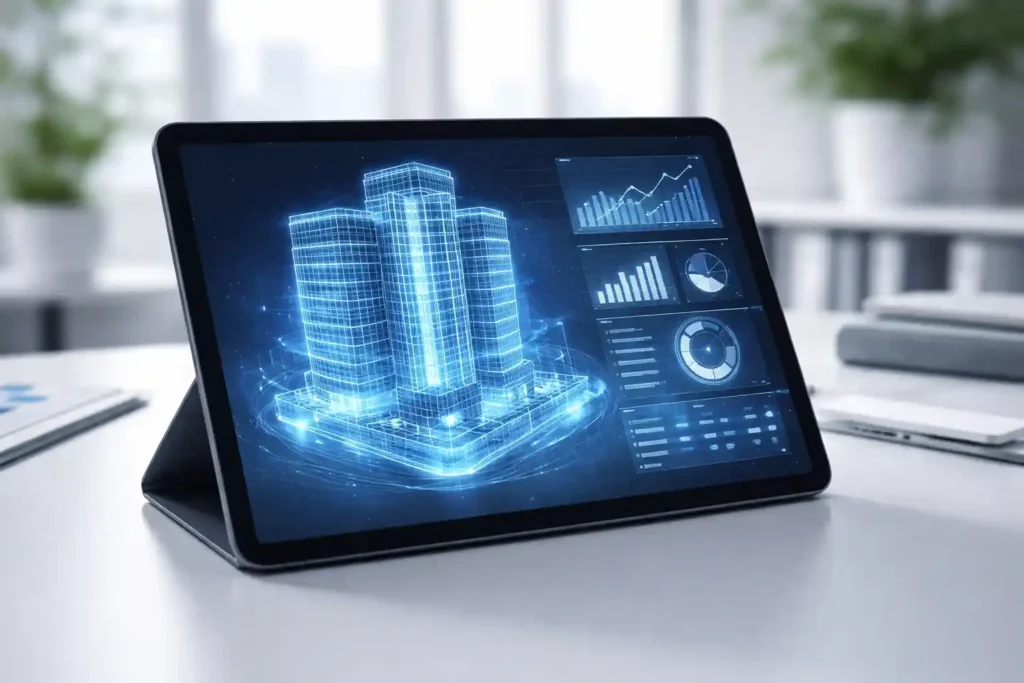
Buildings: Digital twins keep an eye on the water, heating, cooling, and lighting systems in smart buildings. Facility managers may find out where energy is being wasted, test innovative ways to save energy, and fix problems without bothering the people who live there.
Traffic Systems: Some smart cities make digital copies of their roads. These models try to guess how traffic will flow, try out different times for traffic signals, and examine how adding more buildings can change how long it takes to get to work.
The main benefit of each example is the same: try it out first, then do it. Learn in a virtual setting, and then put what you’ve learned into practice in the real world.
Digital Twins in Health Care
The healthcare industry is looking into digital twins in healthcare apps as a way to change the way patients are treated.
Keeping an Eye on Patients: Hospitals make digital copies of each patient using data from wearable sensors, medical imaging, and electronic health records. These virtual models help doctors keep an eye on how well patients are healing and find problems before they emerge.
Scientists make computerised copies of organs like the heart and lungs. With these models, surgeons may perform hard surgeries and test out a lot of different techniques until they find the safest one. This hospital monitoring system makes surgery less risky.
Planning Treatment: Cancer experts use digital twins to see how tumours would react to different combinations of drugs or radiation treatments. They don’t have to guess anymore; they can see what will probably happen and choose treatments that are more likely to help.
Hospital Operations: Some healthcare companies make digital copies of every room in a hospital. These models keep track of how many patients are coming in, how much equipment is being used, and how many staff members are available. Without disrupting real care, administrators can test modifications to the schedule or move departments around.
In healthcare, digital twins can help more than one person at a time. City-wide health models could help public health professionals figure out when diseases will spread, how to best give out immunisations, or how to best use emergency resources when there is a crisis.
But healthcare digital twins bring up big problems about the safety and privacy of patient data, which we’ll talk about later.
How big companies use digital twins
Many big companies in many different fields are using digital twin technologies to help them run their businesses.
Digital twins help energy companies keep a watch on oil refineries, electricity grids and natural gas pipelines. They can test emergency response plans, make energy distribution better, and even make it look like equipment goes down, all without putting real infrastructure at risk.
Planners use computers to make copies of whole cities. The government of Singapore made a very accurate virtual model of the city that shows all of its buildings, transport systems, and underground utilities. Planners use it to look at plans for new buildings, figure out how to get people out of buildings in an emergency, and make public services better.
Digital twins help cargo ports keep track of where things go. These models assist find problems, speed up crane work, and cut down on how long ships have to wait to unload.
Utility companies make simulations of how water, sewage, and waste collection systems work. They could think about what might happen during a flood and how to deal with it when storms are coming.
Microsoft’s Azure Digital Twins platform is being used by a lot of businesses to develop these solutions. It has tools that make it easy to use for studying data, designing systems, and seeing them. Other big tech companies offer similar services, which makes the market more competitive and encourages new ideas.
How Digital Twins Can Help with Digital Change
Digital twins are an important aspect of the digital transformation projects that companies are working on.
People used to plan their enterprises based on evidence from the past and knowledgeable guesses. You can see what the future will be like before it happens with digital twins.
This upgrade makes it simple to set things up to run on their own. Companies can automate scheduled maintenance when digital twins can accurately predict when equipment might break down. When building models tell smart systems how much energy they will use, they can control the temperature on their own.
Digital twins also help people figure out what to do when they don’t know what to do. In a virtual world, engineers can run thousands of experiments to examine what happens in different situations. They find out which changes have the biggest effects and which factors are the most important.
It’s also important to learn how to use emerging technologies like agentic AI. Agentic AI systems can look at digital twins, learn from them, and come up with new methods to improve things that people may not have thought of. Using smart analysis with realistic virtual models can help you make things better.
Companies desire to cut costs. Digital twins assist firms save money by making it less necessary to try things out and fail, keeping equipment running longer, and helping physical assets last longer. People in all fields want to use them since they save money.
It’s even more important to make things safer. When you practise dangerous situations in a safe place, you are much less likely to have accidents in real life. Digital twins can show workers where the hazards are ahead of time, so they don’t have to put their lives on the line by trying out new ways of doing things.
What Digital Twins Are NOT
Let’s get rid of some common misunderstandings.
Digital twins are not the same as copies of people. This isn’t about making fake copies of people or their ideas. The technology does not aim to replicate human minds or identities; rather, it focuses on physical items and systems.
Digital twins are not the same as putting your mind into a computer, which is something that happens in science fiction. No one is putting their brain into a computer. When we say “twin,” we mean things like engines or buildings, not individuals.
Digital twins are not necessarily surveillance instruments, yet privacy problems exist. Technology watches over machines, processes, and the infrastructure. The correct measures should keep people’s privacy safe when used in healthcare or smart cities.
It’s also vital to briefly clarify what a digital wallet is, as the words are similar and can be confusing. A digital wallet keeps track of your payment details for online transactions and uses digital signatures to verify sure the purchases are authentic. It has nothing to do with twins in the digital world. The only thing they have in common is the word “digital.”
Digital twins are a helpful tool for engineers, not a philosophical dilemma about what it means to be human. This difference keeps people from being terrified for no reason.
Concerns, Risks, and Limits
Like any other technology, digital twins have their own problems and issues.
Cost barriers: To make full digital twins, you need to spend a lot of money on sensors, software, computers, and people who know how to use them. These solutions are typically prohibitively costly for small organisations, which offers bigger corporations with greater resources an advantage.
Data accuracy: Digital twins only perform properly provided the sensor data is correct and reliable. terrible sensors produce terrible models, which cause bad decisions. It is still true that garbage in, garbage out.
Cybersecurity risks: Hackers can get in when systems are connected. If criminals can get into a factory’s digital counterpart, they could discover critical business secrets or find methods to screw up the work. Companies need to pay a lot of money to keep their data safe.
Worries regarding privacy: Smart city models and digital twins in healthcare collect a lot of data about people’s life. Who knows this? Who can get to it? How long does it last? There has to be clear solutions and solid standards for these moral questions.
Maintenance needs: Digital twins need to be updated, calibrated, and upgraded all the time. Digital representations of physical systems need to be modified in the same way when the real ones get older or change. Digital twin makers say they will keep them up to date.
Model limitations: Even the best simulation models make things easier. Digital twins may not be able to handle unexpected encounters, rare situations, or new behaviours that don’t suit their math models. Models are not magic balls; they are tools that people should keep in mind.
Skills needed: To run digital twin systems, you need to know a lot about the area, as well as be an expert in engineering design, data analysis, and software development. A lot of businesses have problems finding workers who have all of these skills.
Knowing these limits doesn’t make the technology any less useful. It merely reminds us that to do things well, you need to think, spend money, and be humble.
How Close Are We to Having Digital Twins in Our Lives?
Digital twins are not just for research labs anymore, but most people don’t use them every day yet.
In business, adoption is going up all the time. Big industries, energy corporations, and infrastructure operators are finding digital twin technology to be more and more useful. As costs fall down and benefits become obvious, the trend is toward more widespread adoption.
Hospitals are testing digital twins in healthcare, but most of the time they don’t use them. This technology could be helpful for specialised treatments and difficult surgeries, but it doesn’t need virtual models for routine checkups and procedures.
Digital twins are still not particularly frequent among regular people. You won’t be able to find a digital twin of your car or home furnace unless you have very expensive, cutting-edge equipment. The technology needs to be easier to use and less expensive before normal homeowners can directly profit from it.
Digital twin projects are part of smart cities plans, but most cities haven’t started using them yet. Some cities are ahead of the rest, and others are watching and learning.
There are a lot of things that need to happen before this technology can be used by more people. For example, sensor costs need to go down, cloud computing has to get better, software tools need to get better, and there need to be clearer examples of how much money you can make. Digital twins are likely to become more widespread in workplaces during the next ten years, but most people won’t be able to see them.
The Future of Digital Twin Tech
There are a few developments that will probably change how digital twins grow in the future.
More intelligent simulations: As computers get faster and algorithms get better, digital twins will be able to manage more complex systems with more precision. Models that today take hours to run might be able to offer results right away. This speed lets you make decisions in real time that you couldn’t before.
Predictive medicine: The use of health applications could go up a lot. When you go to the doctor for frequent exams, they will update your unique digital twin to show how your body changes over time. Years before symptoms show up, doctors might be able to spot patterns of disease.
Climate modelling: Digital twins of forests, oceans, and the atmosphere could help environmental scientists understand more about climate change. These models could try out new ways to step in and make better guesses about what will happen in the future.
local planning: Digital twins of cities could become standard tools for local governments. Before they even start building, planners might utilise simulations to determine how infrastructure expenditures will hold up over decades of growth.
Faster design cycles: Engineering teams could speed up the process of making something by testing more virtual versions. New products might get to stores faster and have fewer problems that pop up out of the blue.
It seems like integration with future technology platforms is going to happen. Digital twins will presumably work with AI systems that detect patterns that people don’t see, make little improvements automatically, and come up with novel approaches to handle hard issues.
Responsible development is the most important thing to do to attain good results. We need to have serious talks about privacy, security, access, and fairness as digital twins get better. In the world of technology, things change fast. Ethics and governance need to work together.
Questions That People Often Ask
Is a digital twin the same as a model?
No, not really. Simulations normally only run once to answer a specific issue, utilising the information you give them ahead of time. Digital twins always obtain information from their physical twins in real time. You can think of simulations as photos and digital twins as live video feeds.
Do homes have digital twins yet?
There aren’t many true digital twins for houses. Some high-end smart homes have complex monitoring systems that are like digital twins, but most homes don’t have enough data or money to pay for them. This could change when IoT devices become more widespread and less expensive.
Are digital twins safe?
The technology itself is not unfair. How successfully an organization sets up and protects its systems is what makes it safe. You need to have the necessary privacy protections, access restrictions, and cybersecurity safeguards in place. Safety precautions should be the most important thing for companies that develop digital twins from the outset.
Who can see the information in a digital twin?
It all depends on the situation. Usually, the entity that owns the equipment in a factory also owns the data. In healthcare, HIPAA and other standards keep patient information safe. In smart cities, the government should make regulations about who owns data and who can see it. It is very vital to have clear legal rules.
Final Thoughts
Digital twins are one of those technologies that work silently in the background to make systems safer, more efficient, and more predictable.
Understanding what digital twins are helps us understand how organisations make decisions nowadays. Engineers, medics, and planners can test out ideas with these virtual copies before they spend money on them. They help users see patterns in data that they would not have noticed before. They notice problems coming and have time to stop them.
Our world gets more sophisticated every year, thus this technology is crucial. You need better tools to deal with that. Digital twins enable you see things that are hard to see, try things that haven’t been tried, and learn without breaking things.
That said, it’s absolutely vital to plan ahead. Digital twin systems handle sensitive information, control vital infrastructure, and have an impact on important decisions. You need to know how to do this correctly, know about ethics, and be able to govern responsibly.
There is a lot of room for growth. Hospitals that save lives by making better plans for treatments. Cities with reduced traffic and energy utilisation. Factories that make more stuff and have fewer issues. It’s worth it to keep putting money into it and come up with fresh ideas because of these rewards.
Digital twins are still evolving. The technology will grow better as sensors, algorithms, and computers get better. What looks novel and thrilling now will be normal tomorrow.
Digital twins are a great way to see how the actual and virtual worlds can operate together right now. They remind us that making a careful replica and watching what occurs might sometimes be the greatest approach to learn how something works. That simple idea is affecting entire businesses and might even change how we interact with the buildings and other things around us.
