
What Is Decentraland? The Virtual World You’ve Been Hearing About
You may have heard that people are buying land in the metaverse and then selling it for real money. At first, it sounds odd. How can land be in a digital world? And why would somebody spend thousands of dollars on something they can’t even touch?
That’s where Decentraland comes in. It’s one of the first virtual environments where people can own digital land, develop stuff on it, and even make money from it. If you’ve been wondering what all the excitement is about, you’re in the correct place. Let’s break it all down into simple, clear words.
What is Decentraland?
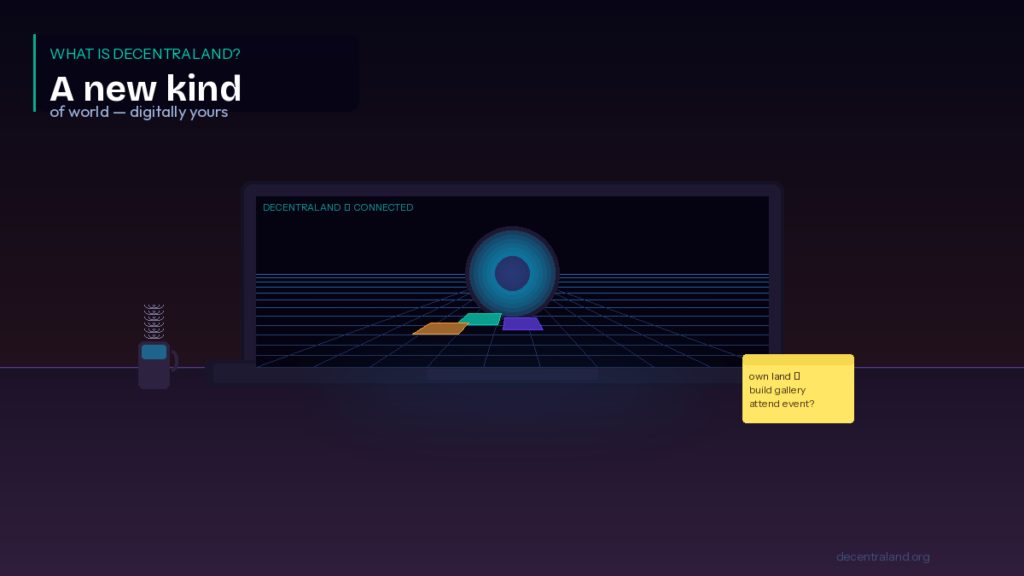
Decentraland is a virtual environment that exists on the internet. You make an avatar, which is a digital version of yourself. You can wander around, explore, communicate to other people, go to buildings, go to events, and even buy your own piece of digital land.
It’s like a video game world, but here’s the big difference: the users own it, not a company. If you buy land in Decentraland, that land is yours. Not borrowed or rented, but really yours, with a record that makes it impossible for anyone to take it away from you without your permission.
anyone talk about it a lot when they talk about the “Decentraland metaverse,” which is a shared digital area where anyone can own things.
How Decentraland Works
Think of a huge digital map. The map has thousands of little squares on it, and each square is a piece of land. Some of such squares have buildings on them, like galleries, stores, game rooms, cafés, and concert halls. Some are empty and waiting for their owners to do something with them.
When you go to Decentraland, you can move in any direction on this map as your avatar. You may walk by a digital art gallery, go to a virtual casino, or go to a live music show in someone’s virtual lawn. The Decentraland virtual world is open all the time, every day of the week.
You don’t need any extra tools. You can look around most of it using a normal computer browser. You merely go to the Decentraland platform, make your avatar, and start looking around.
What Is Decentraland Land?
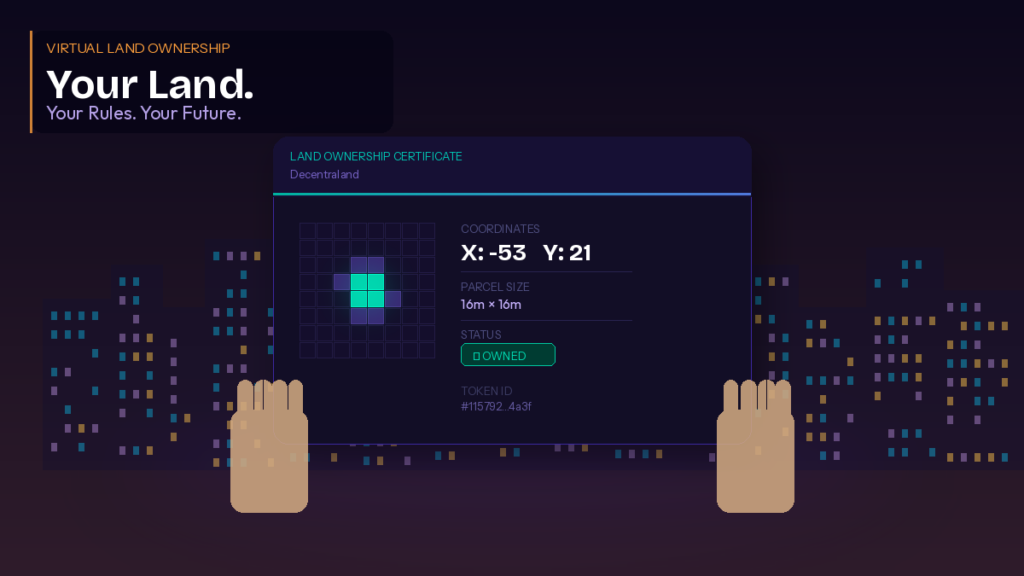
This is when things start to get interesting. There are 90,601 separate land parcels on the Decentraland map, and each one is held by someone. These are called LAND, and they work a lot like owning a little piece of land in a real city.
A nice approach to picture it is to think about having a website. You may make it look anyway you want, put whatever you want on it, ask people to come see it, or even sell it to someone else. Land in Decentraland works the same manner, but it’s a 3D space inside a virtual environment instead of a flat webpage.
The ownership is real and lasts forever. No one, not even the people who made Decentraland, can take your land away. That’s a completely new idea, and it’s a significant reason why so many people are interested in “virtual land ownership” in places like Decentraland.
Why Do People Buy Land in Decentraland?
That’s a good question. The next obvious question is, “Why would anyone want virtual land ownership?” if you realize that it is genuine.
Putting money into something. Some people buy Decentraland land just because they think it will be worth more in the future. Some investors buy digital land in Decentraland places that they hope will become popular, just like individuals buy property in communities that are on the rise.
Businesses that are not real. You can start a store, conduct paid events, or rent out your space if you own land in a busy portion of Decentraland. Fashion, IT, and entertainment industries have all set up virtual stores on Decentraland property, much like real retailers have.
Things to do and see. Private land in Decentraland has hosted concerts, art displays, fashion weeks, networking gatherings, and more. People pay to have events there, exactly like they would rent a real space.
Brand presence. Samsung, Adidas, and other entertainment companies have bought “metaverse real estate” in Decentraland to reach younger, tech-savvy consumers in a new way.
It seems a little like having a corner business in a busy town square. Location, foot traffic, and having a venue that people can really visit all add genuine value.
What People Actually Do Inside Decentraland
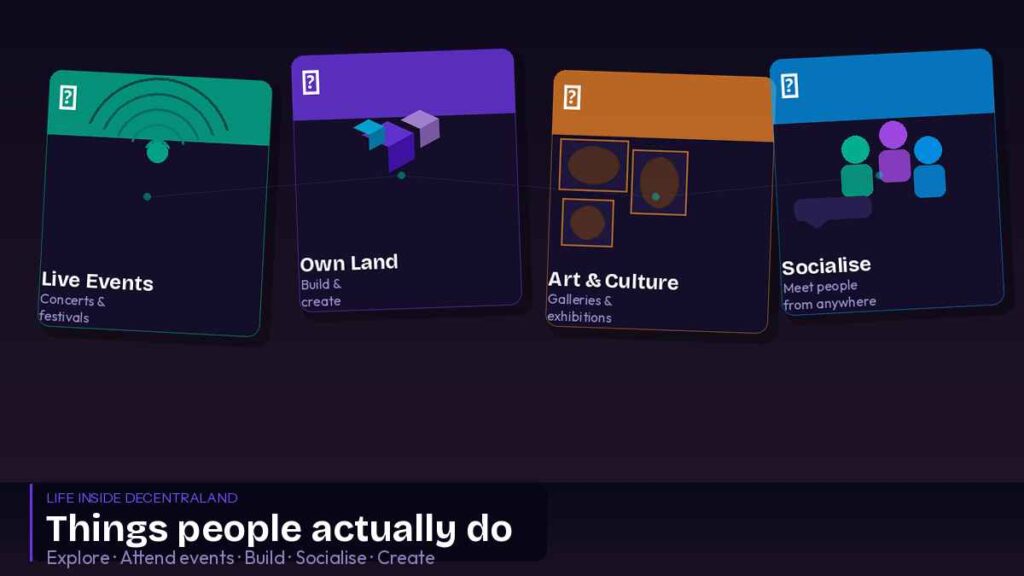
So what happens when you really log in and look around? A lot, to be honest.
You can explore the map at your own leisure, walking around different neighborhoods. Some have a lot of art, some are gaming centers, and some are just places where people hang out and talk. You can go to live events like digital fashion shows or virtual concerts. You can play games that other people have made on their land. You can go to virtual stores, look at digital art, and even buy clothes for your avatar.
A lot of it feels like a social environment, too. In Decentraland, people meet up like they would in a park or café, but in a digital way. The Decentraland platform is like a blank canvas that the community may fill with whatever they want to make.
Who Actually Owns Decentraland?
This is one of the more interesting portions. Unlike Facebook or Fortnite, which are both owned and run by one corporation, Decentraland is not owned by one company.
A community runs it instead. People who own land and utilize the platform can vote on how Decentraland grows and changes. No one person can decide to shut it down, modify the rules, or take your land away.
This is a big change from how most digital platforms work. You are usually a guest in someone else’s reality. You are a real stakeholder in Decentraland if you own land there.
Why Decentraland Became Famous
Decentraland didn’t just show up one day out of the blue. It went public in 2020, and when portions of Decentraland land started selling for crazy amounts of money, it rapidly made the news. A virtual property in Decentraland once went for more than $2 million. That tale went all over the place.
Then big brands began to show up. There were fashion weeks in Decentraland. There, musicians played virtual concerts. Journalists began to cover metaverse real estate as if it were the next property grab in Silicon Valley. A lot of people had never thought about the idea that digital land could be real and valuable, and it made a lot of people very interested.
The Honest Truth: Limits and Reality
It wouldn’t be fair to make it all rosy, so here’s the more balanced version.
Decentraland is still a fairly new platform, and the number of people who use it every day is small compared to popular social media or video games. The graphics aren’t as good as those in a AAA video game. Not every visitor that logs in stays for very long.
During the 2021–2022 metaverse hype wave, the values of virtual real estate in Decentraland went up a lot and subsequently went down a lot. Like any new market, it’s hard to say for sure where prices will go.
It’s also important to remember that Decentraland isn’t very popular yet. Most individuals don’t log into virtual worlds on a regular basis like they do with Instagram or YouTube. That could change, but it hasn’t happened yet.
The Future of Decentraland
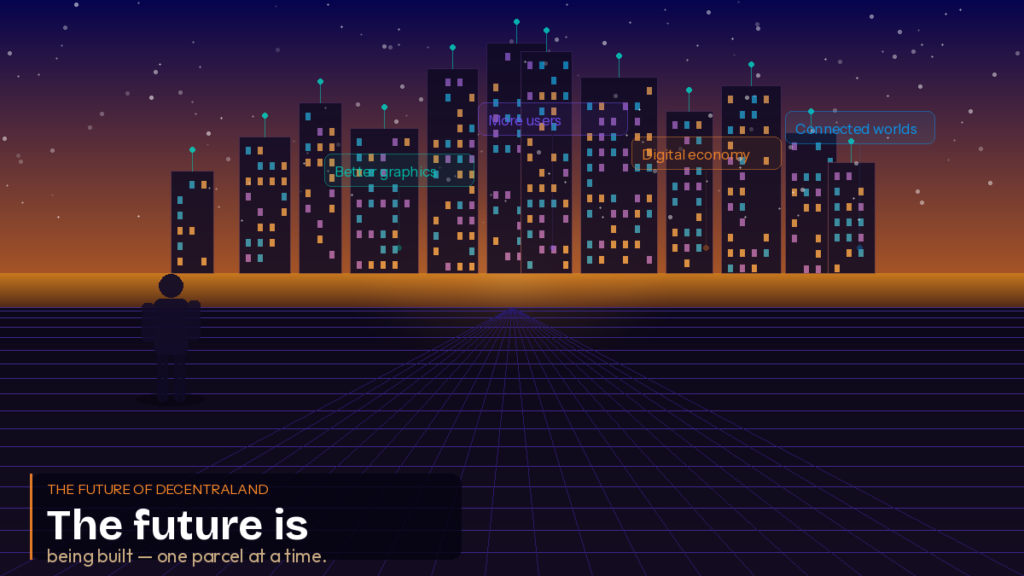
Even though there are certain problems, the ideas behind Decentraland point to something truly innovative. As technology for the internet gets better and virtual reality hardware gets cheaper, experiences on platforms like Decentraland could becoming a lot more interesting and immersive.
People are also becoming more interested in linking up multiple virtual worlds to make a real “metaverse” where you can roam between digital environments and carry your own things with you. Decentraland is one of the most important tests of how to make this form of digital economy work.
More corporations, artists, and developers are looking into what they can make in virtual environments. As more of life goes online, the idea of really owning something digital, whether land, art, wearables, or experiences, will become increasingly important.
Questions That Are Often Asked
What is Decentraland?
Decentraland is a virtual environment on the internet where people can explore, make friends, construct things, and own digital land. It’s one of the most famous examples of a metaverse platform that users own.
Is it free to go to Decentraland? Yes. You don’t have to pay anything to visit and explore Decentraland. You may make an avatar and walk around for free. You have to pay to buy land or things, but you don’t have to pay to explore.
Is it true that people own land in Decentraland? Yes, it is. In Decentraland, people really own land, and the records show that only the owner can sell or give it away. The people who made Decentraland can’t even take it away.
Is Decentraland a game or a universe?
It’s not really a game; it’s more like a metaverse. There are games on Decentraland, but the platform itself is more like a virtual world or social place. You’re not trying to reach a specific goal as you would in a video game.
What makes Decentraland important?
Decentraland is important since it’s one of the best instances of real digital ownership and user-governed virtual places. It shows what the internet could be like if people, not businesses, owned the places they spend time in.
The Bottom Line
Decentraland is an example of how digital worlds may go beyond just being games to become places that people own, shape, and form economies in. It’s not perfect, and it’s not totally mainstream either. The future is still being written.
But now you know what it means when someone claims they “bought land in the metaverse.” One of the best instances of the notion in action is Decentraland. And whether it becomes a key part of how we live online or just an early test that leads to something bigger, it has already changed the way many people think about owning things in the digital era.
